
There’s a particular kind of whiplash that comes from watching a beauty trend you lived through the first time get treated as a discovery by a generation who wasn’t old enough to have an Instagram account when it was invented. The frosted lip gloss you owned in 2003. The contouring tutorial you watched on YouTube in 2014. The smudged eyeliner you absolutely wore to a gig in 2011. All of it, back. All of it, fresh. All of it being recreated on TikTok with much better lighting and considerably better blending technique.
The nostalgia cycle in beauty has always existed, but something about the current moment feels more active than usual. Two distinct eras are being revived simultaneously, and they represent genuinely different aesthetics, different moods, and different things to different people. Understanding why both are happening at once says something interesting about where we are culturally.
Y2K: The Glittery, Glossy, Unserious One
The early 2000s aesthetic never fully disappeared. It just went underground for a while, waiting for enough distance to make rhinestones feel fun rather than embarrassing.
The revival has been building since around 2021 and has had staying power well beyond a typical trend cycle. The TikTok hashtag for Y2K has accumulated over 60 billion views. Low-rise denim came back. So did baby tees, butterfly clips, velour tracksuits, and the kind of bag that is too small to hold anything useful but looks extremely good in a photo. Levi’s reported an 89% sales spike in 2024 from nostalgia-driven campaigns. Kylie Cosmetics celebrated its tenth anniversary in late 2025 with a “King Kylie” collection that leaned directly into the early 2010s aesthetics that made the brand famous.
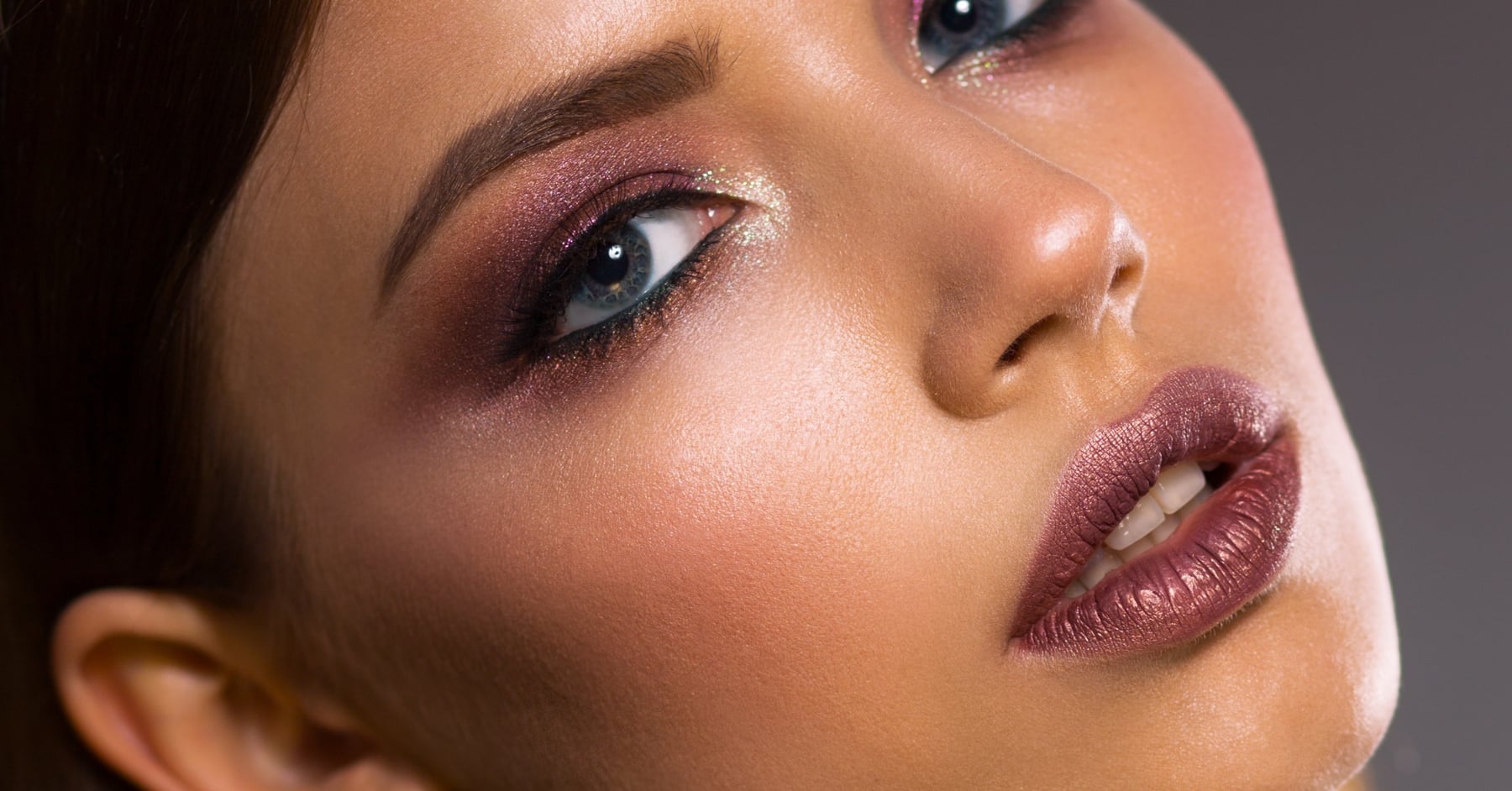
In beauty specifically, the Y2K revival is about things that were considered too much or too tacky and are now considered charming. Frosted eyeshadow in ice blue, lavender, and champagne. Glossy lips, seriously glossy. Shimmery highlighter that reads as glitter from a normal social distance. Thin brows, done precisely rather than by accident. MAC brought back its Pro Lip Erase balm in 2025, the product that powered the concealed-lip look of the 2000s. The original Lancôme Juicy Tubes, which sold in extraordinary numbers from around 2000 to 2008, are being discussed online with the enthusiasm usually reserved for cult products that never got their due.
There’s a psychology to all of this. A 2024 Pew Research study found that 70% of Gen Z engage with nostalgia-driven content daily. That’s partly about escapism. The early 2000s represent a window of time that felt relatively uncomplicated, at least in retrospect. For people who were young then, the era carries a warmth that filters out its actual messiness. For Gen Z, who weren’t there, it carries the appeal of a past that looks visually fun and stylistically committed in a way that current trends sometimes don’t.
The twenty-year rule in fashion is real. Enough time passes that the cringe fades and the charm remains. What was once mockable becomes loveable.
The 2010s: Instagram Face, Heavy Brows, and the Glam Era
The Y2K revival and the 2010s revival are operating somewhat differently. Y2K nostalgia is broadly warm and celebratory. The 2010s revival is a bit more complicated.
This is the era of Instagram Face. The era of Kim Kardashian’s “number 3” contour technique, Anastasia Beverly Hills Dipbrow, Kylie Jenner’s Lip Kits, and eyebrows that were described, without irony, as “on fleek.” It was also the era of beauty influencers like Jaclyn Hill and Manny MUA building massive audiences by posting multi-product glam tutorials that trained an entire generation to think of full makeup application as a daily default rather than an occasional event.
People wore that makeup to university. To the office. To the supermarket. The prevailing logic was: if it looks good on Instagram, it is good.
As one culture strategist put it recently, the “clean girl” aesthetic that replaced all of this has been “devoid of self-expression. It’s just like a shopping list that you can purchase, and there is no expression allowed in that.” After years of Hailey Bieber-coded minimalism, glazed skin, barely-there blush, and slicked buns, some people are ready for the drama to come back.
And TikTok is delivering. Searches for 2016-era beauty looks have surged. Creators are recreating the heavy cut crease, the nude matte lip, the intensely defined brow. Kylie Cosmetics’ King Kylie anniversary collection with its throwback Lip Kits sold strongly off the back of pure nostalgia. The “2026 is the new 2016” trend on TikTok declared January 1, 2026, a cultural reset, bringing back the heavily saturated “Rio de Janeiro” Instagram filter and the general sensibility of the mid-2010s internet.
Indie Sleaze: The Darker, Messier Version
Running alongside both of these but with its own distinct energy is the indie sleaze revival, which is arguably the most interesting aesthetic story happening in beauty right now.
Indie sleaze was never quite a mainstream trend the first time. It was the look of the early 2010s underground, borrowed from the late-2000s blog era: smudged eyeliner, artfully wrecked, worn as if you had slept in it and come directly from a gig. Sky Ferreira. Early Lana Del Rey. The whole constellation of artists who made looking slightly like a beautiful disaster feel like the highest possible aspiration.
Charli XCX’s BRAT album in 2024 did more to bring this aesthetic back than anything else. The album, the campaign, the neon green, the lived-in smoky eye that anchors her entire look, all of it reframed indie sleaze as a kind of philosophy: anti-perfection, anti-curation, genuinely committed to having a good time rather than documenting it. The reaction was enormous. BRAT summer became shorthand for an entire attitude, and the beauty aesthetic that came with it, smudged liner, flushed cheeks, muted lips, zero apparent effort that actually required significant effort, spread across both TikTok and Instagram with speed.
The irony, as one writer observed, is that recreating the “effortless” indie sleaze look now involves more products and more technique than the original did. The mess has been refined. But the impulse behind it is genuine.
Why Both Are Happening Right Now
Beauty trends are always partly about what people are reacting against. Y2K maximalism and indie sleaze are both, in different ways, reactions against the clean girl era, which had an enormously long run and, at its peak, became a little airless. The same neutral palette. The same three products. The same effect. Everything looked tasteful and nothing looked like a personality.
The nostalgia revival also reflects something broader. When the world feels difficult or uncertain, people reach for aesthetics that feel manageable and warm. The past, particularly the recent past, offers that. You know how the story went. You know what the music was. There’s comfort in a frosted eye look or a heavy brow because they carry associations that go beyond beauty, childhood, or youth, or just the feeling of a particular Saturday afternoon in 2003.
What’s interesting about 2025 and 2026 is that this nostalgia isn’t asking you to choose one era. You can layer the Y2K gloss over an indie sleaze eye. You can take the 2016 contour and soften it with the 2024 dewy skin trend. The current aesthetic landscape is genuinely pluralistic in a way it hasn’t always been. There’s no single correct answer to what beauty looks like right now.
That might be the most 2025 thing of all.